







| |
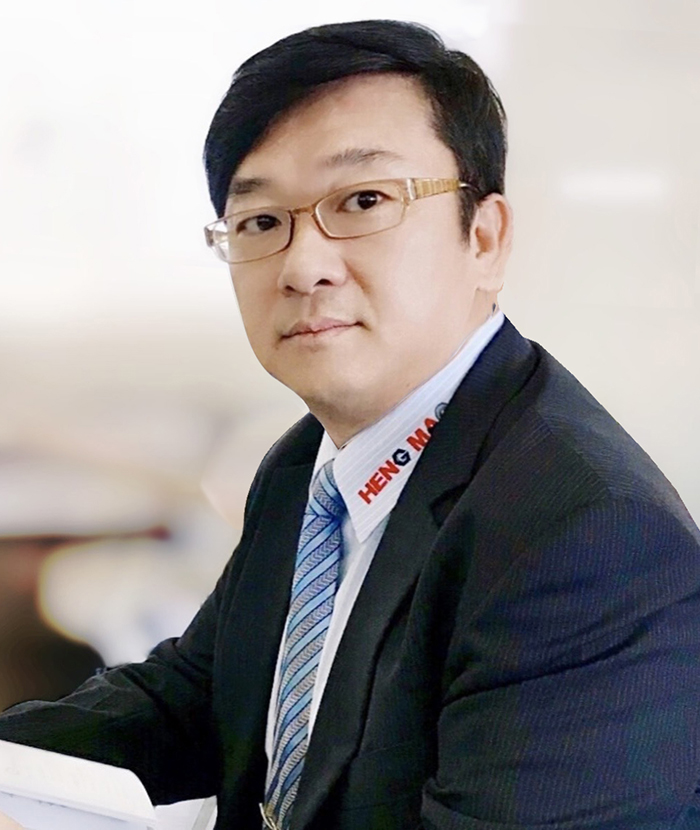
Tsung-Kuo Wu
In recent years, the international landscape has been rapidly evolving, and trade competition continues to intensify. In the post-pandemic era, adjustments in tariffs and supply chain policies across countries have led to significant changes in the global industrial landscape. If Taiwan’s fastener industry continues to rely on low-price competition for standard products, it will be difficult to sustain its competitive advantage in the long term. Only by moving toward high-quality, high value-added products can it secure a solid position in the global market. Looking ahead, the fastener industry should actively position itself within the aerospace and automotive supply chains, as these sectors represent key directions for value enhancement. At the same time, companies must strengthen quality management, technological innovation, service capabilities, and market segmentation to avoid falling into a vicious cycle of price-cutting competition.
Regarding the association’s operations, the current focus is on two key areas: “Exchange” and “Succession.”
First, in terms of “Exchange,” the association will strengthen the role of the International Committee. In addition to deepening engagement with European and American markets, it will actively expand into emerging markets such as Southeast Asia. By participating in international industry organizations and business activities, the association aims to help members explore new business opportunities. Furthermore, it will continue to maintain close collaboration with domestic industry associations, integrating resources from industry, government, and academia to promote the exchange of technology and market information. In terms of industry interaction, overseas visits and exhibition activities will continue to be organized annually to broaden international perspectives. In line with digital trends, this year the association has also transformed its traditional printed membership directory into a digital version available for online download, which not only reduces costs but also enhances exposure and marketing effectiveness.
In terms of “Succession,” the key to sustainable industry development lies in talent cultivation. Over the years, the Education Committee has consistently organized professional courses related to the fastener industry, holding at least four training sessions annually, each attracting around 100 participants on average. In recent years, an increasing number of younger generations have joined these programs, demonstrating the industry’s strong growth potential. At the same time, second-generation business successors (those born in the 1980s and 1990s) are encouraged to actively participate in association activities, building networks and learning platforms. In today’s business environment, success is no longer achieved in isolation; only through collective engagement and resource sharing can companies continue to grow in a highly competitive market.
Finally, I would like to conclude with two quotes as encouragement to the industry:
“While things may not always go as we wish, we should strive to have a clear conscience,” and
“When flowers bloom, butterflies will naturally come.”
Regarding the association’s operations, the current focus is on two key areas: “Exchange” and “Succession.”
First, in terms of “Exchange,” the association will strengthen the role of the International Committee. In addition to deepening engagement with European and American markets, it will actively expand into emerging markets such as Southeast Asia. By participating in international industry organizations and business activities, the association aims to help members explore new business opportunities. Furthermore, it will continue to maintain close collaboration with domestic industry associations, integrating resources from industry, government, and academia to promote the exchange of technology and market information. In terms of industry interaction, overseas visits and exhibition activities will continue to be organized annually to broaden international perspectives. In line with digital trends, this year the association has also transformed its traditional printed membership directory into a digital version available for online download, which not only reduces costs but also enhances exposure and marketing effectiveness.
In terms of “Succession,” the key to sustainable industry development lies in talent cultivation. Over the years, the Education Committee has consistently organized professional courses related to the fastener industry, holding at least four training sessions annually, each attracting around 100 participants on average. In recent years, an increasing number of younger generations have joined these programs, demonstrating the industry’s strong growth potential. At the same time, second-generation business successors (those born in the 1980s and 1990s) are encouraged to actively participate in association activities, building networks and learning platforms. In today’s business environment, success is no longer achieved in isolation; only through collective engagement and resource sharing can companies continue to grow in a highly competitive market.
Finally, I would like to conclude with two quotes as encouragement to the industry:
“While things may not always go as we wish, we should strive to have a clear conscience,” and
“When flowers bloom, butterflies will naturally come.”
12F.-1, No. 615, Sec. 2, Datong Rd., East Dist., Tainan City 701012 , Taiwan (R.O.C.)
TEL : 06-2679960 / FAX : 06-2670107 / E-mail : admin@tfta.com.tw
Copyright ® 社團法人台灣螺絲貿易協會 Taiwan Products, B2BChinaSources, B2BManufactures
Web design by Fastener World Inc.
TEL : 06-2679960 / FAX : 06-2670107
E-mail : admin@tfta.com.tw
12F.-1, No. 615, Sec. 2, Datong Rd., East Dist., Tainan City 701012 , Taiwan (R.O.C.)
Copyright ® 社團法人台灣螺絲貿易協會 Taiwan Products, B2BChinaSources, B2BManufactures
Web design by Fastener World Inc.